Products - PI (Physik Instrumente) L.P.
Parallel Photonic Alignment Engines – Modular. Dynamic. Designed for IC Handlers.
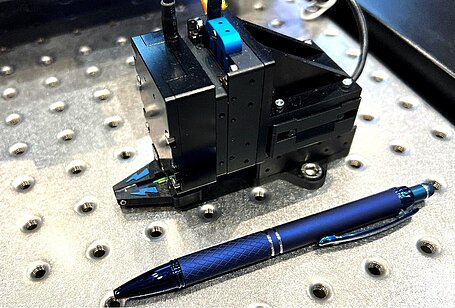
As silicon photonics (SiPh) moves toward volume production, manufacturers are looking to leverage the proven IC test ecosystem rather than introducing entirely new, photonics-specific infrastructure. High-throughput IC handlers, already deployed globally for electronic IC testing, provide an ideal platform to scale photonics testing when combined with compact, high-performance photonic alignment engines.
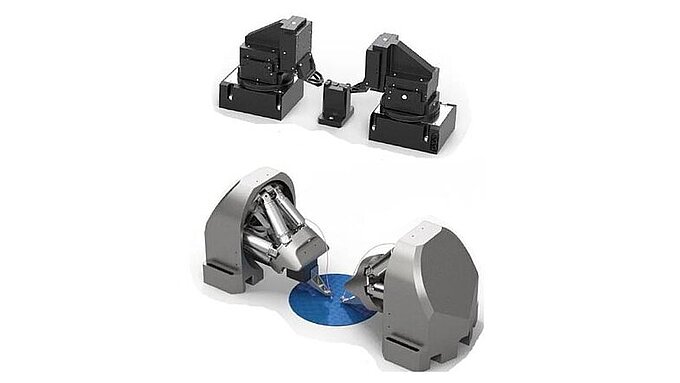
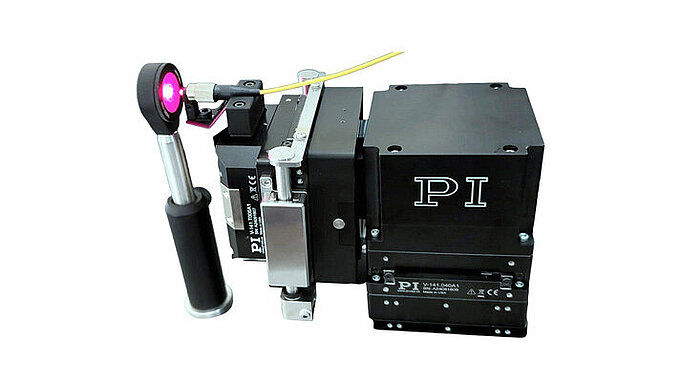
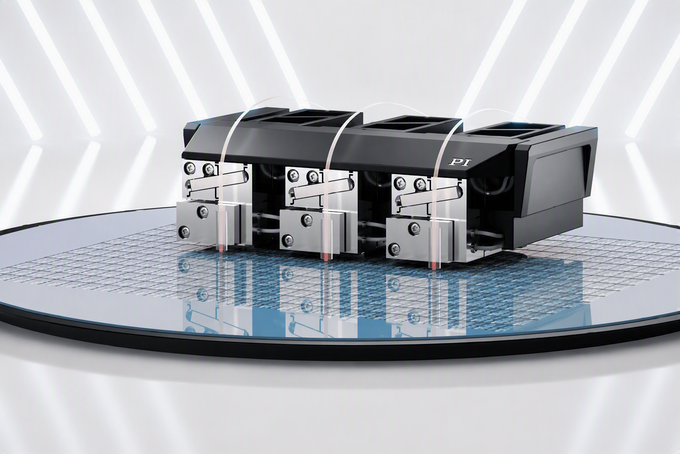
PINovaLite photonic alignment engines deliver industrial-grade performance with a compact, modular form factor, enabling seamless integration into handlers, probers, and automated test platforms. The new compact system builds on years of experience gained with the F-141 PINovAlign 4-DoF and 6-DoF units.
Compact Design Enables Side-by-Side Deployment
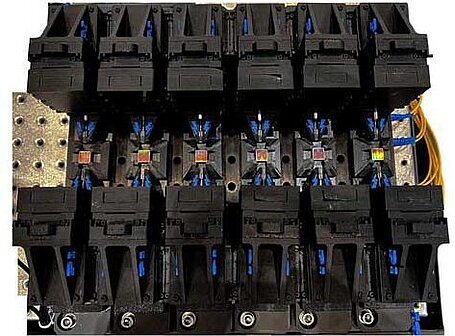
The compact design enables dense side-by-side deployment, supporting simultaneous optical coupling and measurement across multiple sites without impacting throughput or structural integrity. A modular architecture allows manufacturers to start with today’s requirements and scale forward, protecting tooling investments as photonics processes evolve.
High-Speed Alignment Algorithms
PINovaLite alignment engines benefit from PI’s proven fast multi-channel alignment (FMPA) algorithms and ultra-fast PILightning first light detection algorithms. These algorithms run embedded on advanced controller hardware further improving performance. Together with the highly responsive mechanics design, PINovaLite can shorten alignment times by up to 99% compared to traditional methods.
Photons instead of Electrons: Reducing Power Consumption of AI Data Centers
This superior performance, combined with the parallel operation of compact alignment systems, translates directly into much higher throughput. It brings photonics testing closer to the economics of traditional IC production and paves the way for cost-efficient, high-volume manufacturing of photonic integrated circuits (PICs). By replacing electrons with photons, this approach supports the growth of AI data centers while significantly reducing power consumption.