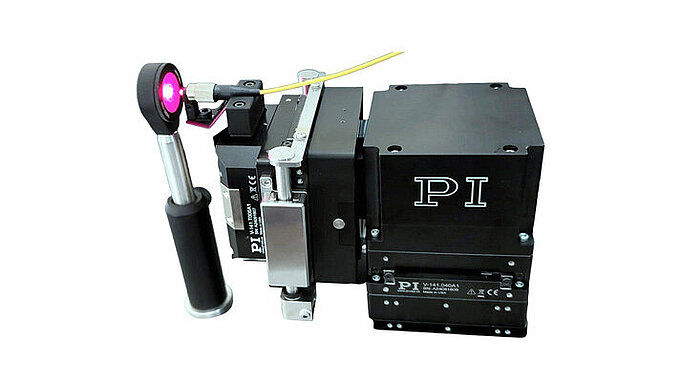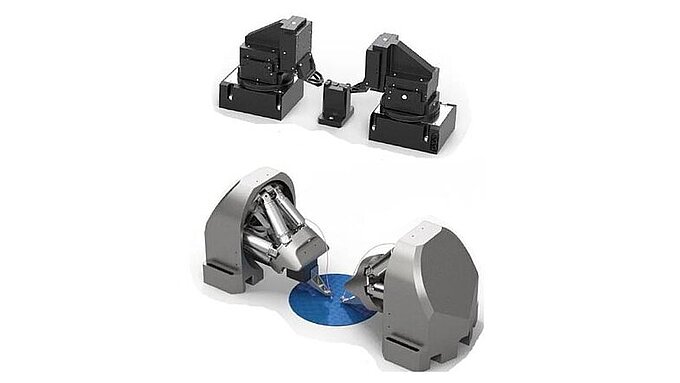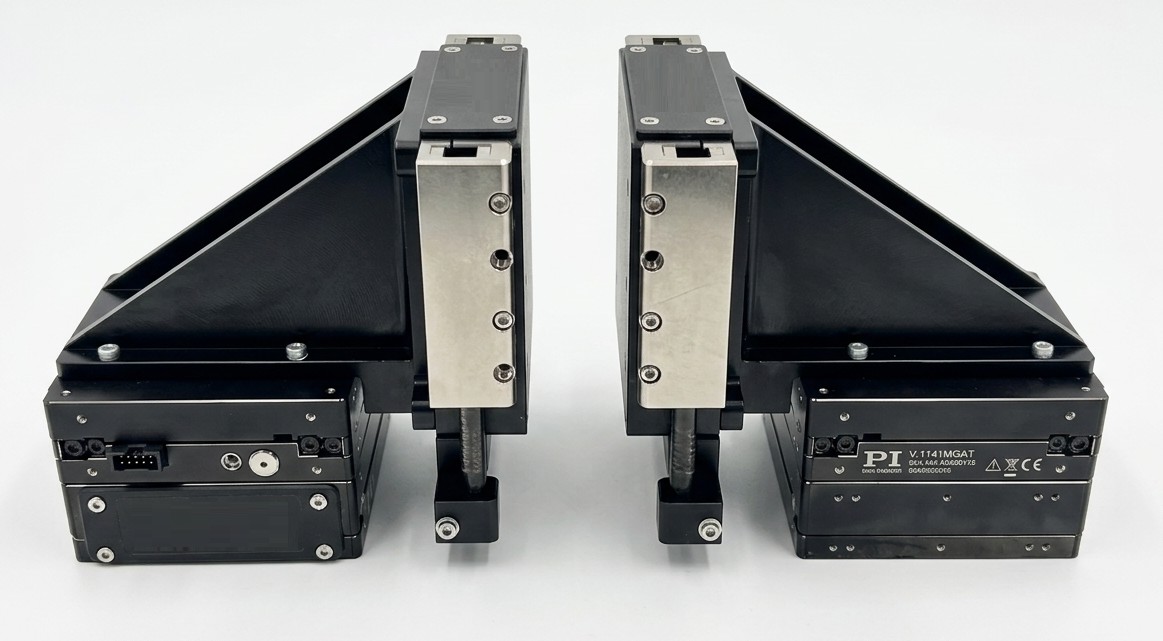
PINovAlign Pulse is a precision alignment system developed specifically for automated optical assembly with pulsed and modulated laser sources. It is based on the PINovAlign F-141 system and combines direct-drive precision motion with embedded alignment algorithms that allow two optical components to be optimized in parallel, even when continuous optical feedback is not available.
Laser Diode Manufacturing
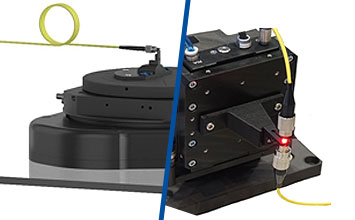
A primary application is the automated alignment of Fast Axis Collimating (FAC) and Slow Axis Collimating (SAC) lenses in laser diode manufacturing. The same architecture can be applied to other optical assembly processes requiring precise relative positioning of two components using intermittent or modulated optical feedback.
Key Features
- Orders of magnitude faster alignment. Demonstrated ~30 seconds compared with 15 - 30 minutes using conventional processes
- Multi-axis automated optical alignment system
- Designed for pulsed and modulated laser sources
- Parallel alignment and optimization of two optical components simultaneously
- Direct-drive linear motors with optical encoder feedback
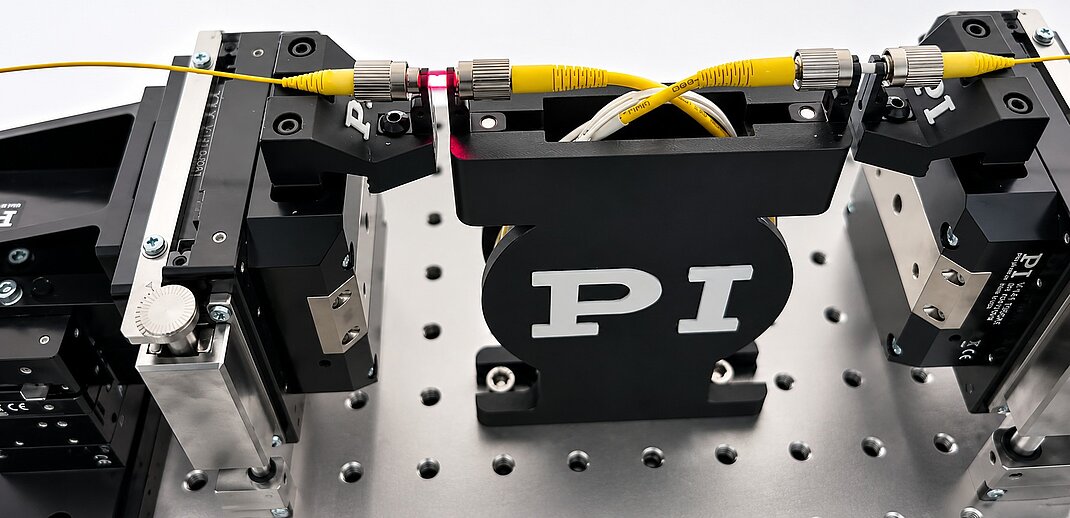
The Challenge of Aligning with a Pulsed Optical Signal
Conventional active alignment assumes a continuous optical signal. The system moves an optical element, measures optical power, determines the direction of increasing signal, and converges toward the optimum position.
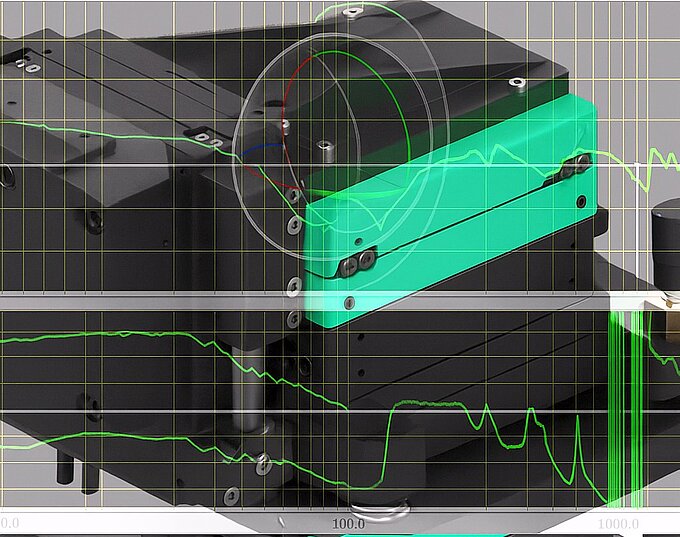
Pulsed and modulated lasers fundamentally alter this process because the optical signal is available only during specific time intervals. Motion, encoder position, signal acquisition, and optimization must therefore be synchronized. If no signal is initially detected, the system must first locate and acquire "first light" before optimization can begin.
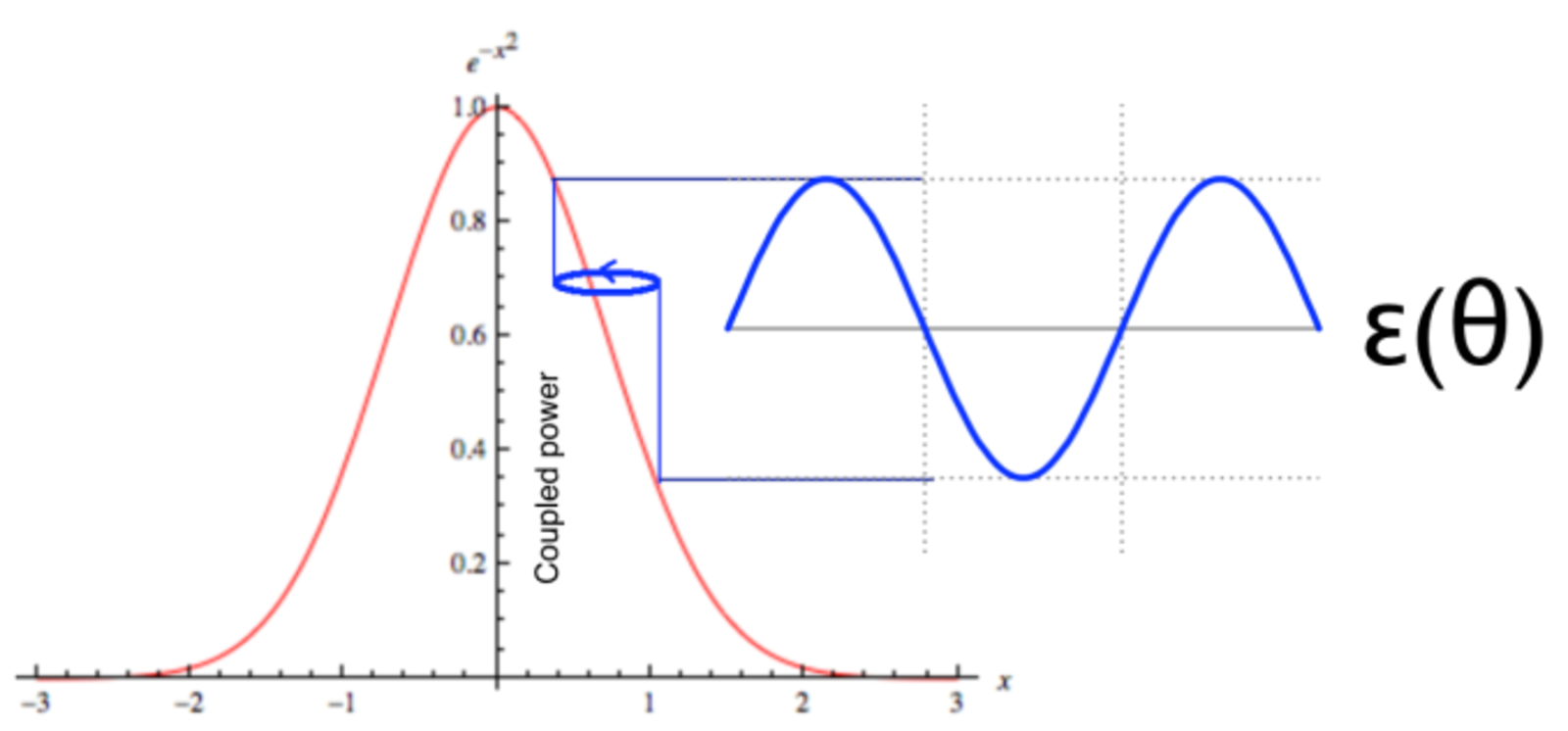
The challenge becomes even greater when multiple optical elements, such as Fast Axis Collimating (FAC) and Slow Axis Collimating (SAC) lenses, must be aligned relative to one another. Movement of either component affects the measured optical response, making conventional sequential optimization inefficient and often requiring multiple iterations.
Embedded Algorithms for Intermittent Optical Signals
PI NovAlign Pulse was developed specifically for this coupled, intermittent-signal alignment problem.
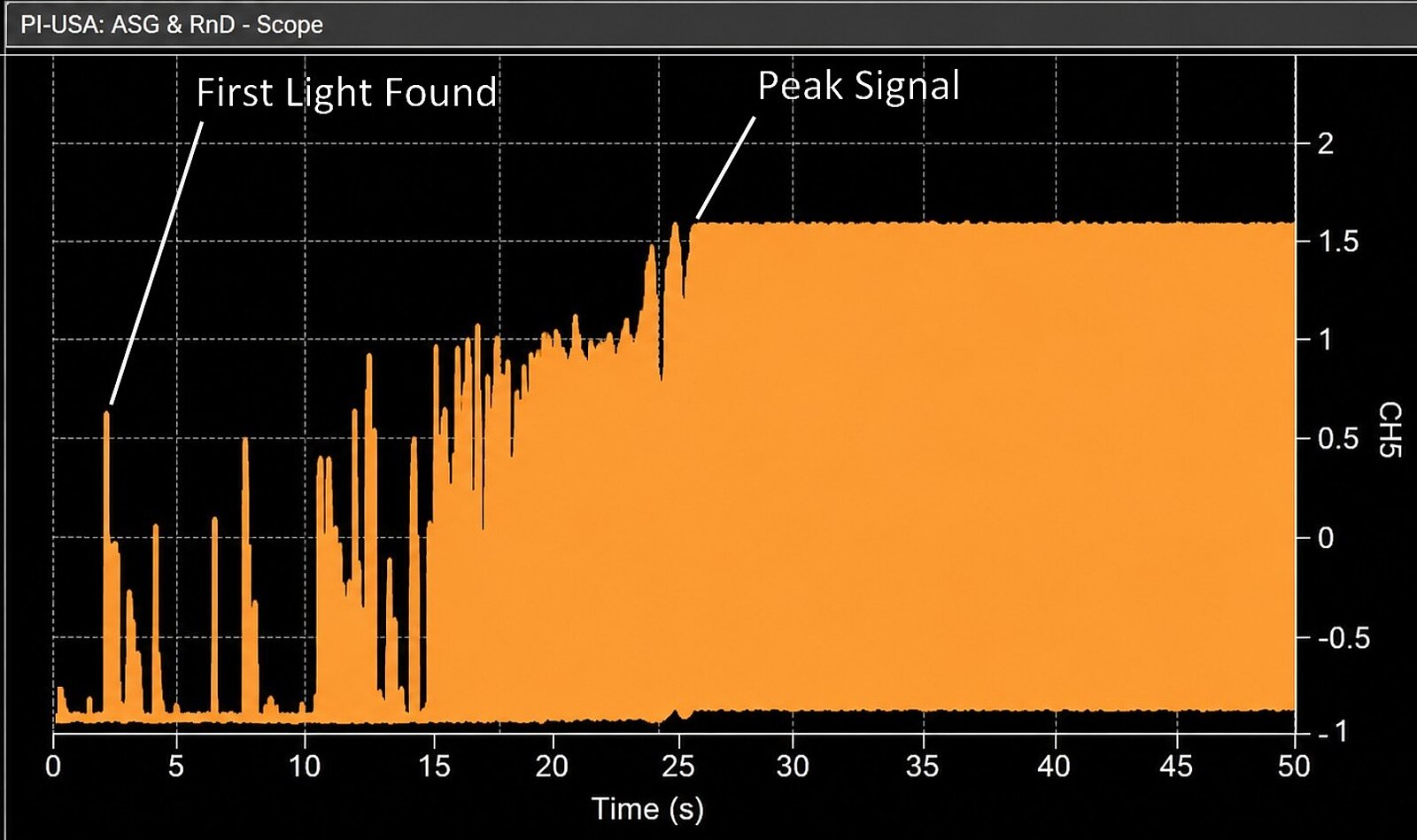
Rather than optimizing individual components sequentially, NovAlign Pulse treats FAC and SAC alignment as a coordinated system, enabling parallel optimization of their relative positions. After first light is acquired, successive measurements are processed onboard and correlated with position data to rapidly converge on the optimum alignment, minimizing process time and reducing dependence on host-computer communication.
Designed for High-Throughput Automated Laser Manufacturing
PINovAlign Pulse integrates precision motion hardware, servo control, signal acquisition, synchronization, and patent-pending alignment algorithms into a single subsystem optimized for automated laser assembly. The system was specifically designed to facilitate integration into automated assembly equipment.
Compact Cartesian alignment stages with three-phase direct-drive linear motors, high-force-density Halbach arrays, and direct optical encoder feedback provide backlash-free motion, rapid acceleration, and short settling times within a small footprint. Precision crossed-roller bearings and low moving mass enable the fast, repetitive scanning required for high-throughput optical alignment.
By combining hardware, control, and onboard processing, NovAlign Pulse allows host automation systems to command complete alignment routines instead of coordinating individual positioning moves, reducing software complexity and accelerating system integration.
Low-noise motion-control electronics also help minimize interference with sensitive optical measurements.
Motion and Alignment Specifications
Parameter | NovAlign Pulse |
Degrees of freedom | 3 |
Linear axes | X, Y, Z |
Linear travel | 40 mm |
Linear drive | Three-phase direct-drive linear motor |
Linear guidance | Crossed-roller bearings |
Position feedback | Optical linear encoders |
Control architecture | Multi-axis EtherCAT |
Alignment processing | Embedded controller |
Optical feedback | Pulsed / modulated optical signal |
Alignment configuration | Dual-sided / dual-component |
Primary application | FAC/SAC lens alignment |
Additional applications | Laser and optical component assembly |
Final positioning performance and system specifications depend on configuration, fixturing, payload, optical feedback device, and process requirements.
From Minutes to Seconds
In precision laser manufacturing, alignment time can become a significant part of total assembly cycle time. Increasing stage velocity alone does not solve this problem when the limiting factor is the search and optimization process.
NovAlign Pulse combines high-dynamic precision motion with alignment algorithms developed for intermittent optical feedback. In an initial FAC/SAC application, the system reduced an alignment process from approximately 15–30 minutes to about 30 seconds, significantly increasing manufacturing throughput.
Typical Applications for PINovAlign Pulse
- FAC lens alignment
- SAC lens alignment
- Pulsed laser diode assembly
- Laser collimation
- Dual-element optical alignment
- Active optical assembly
- Modulated-source alignment
- Automated laser manufacturing