Replacing lead-based piezoelectric ceramics in ultrasonic motors sounds straightforward until you try to maintain the performance of a precision motion system.
Conventional PZT ceramic materials offer high piezoelectric efficiency and have been optimized over decades. Lead-free piezo materials have not yet reached the same performance level. In particular, lower piezoelectric constants and increased self-heating can make it difficult to maintain a stable resonant operating point during continuous motion.
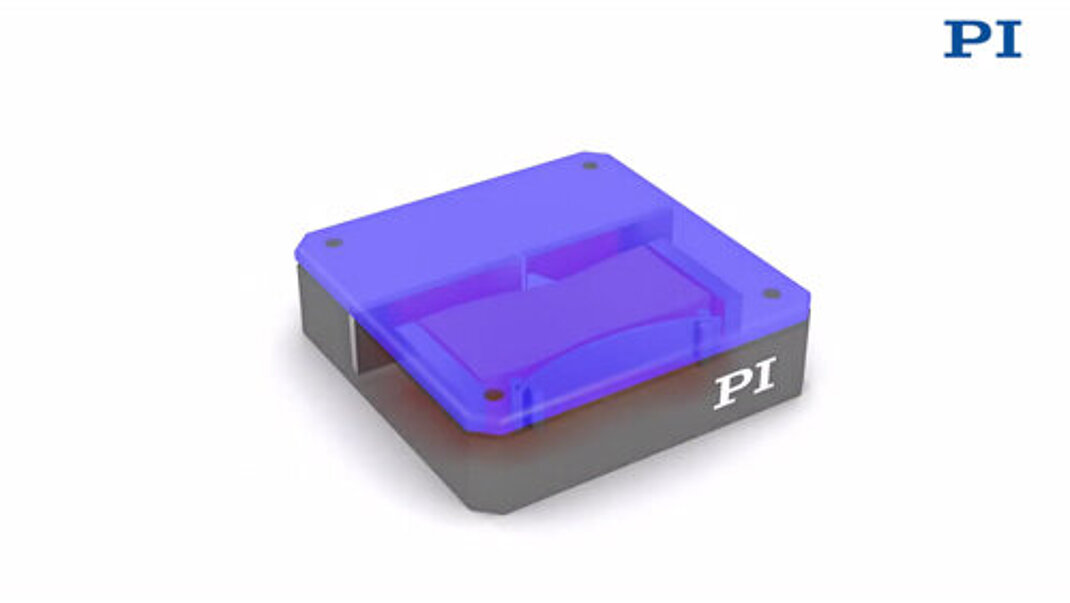
PI R&D engineers investigated a different approach: rather than looking at the ceramic material alone, they redesigned the actuator structure around the characteristics of lead-free ceramics. The result is a four-layer ultrasonic actuator designed to improve thermal behavior while reducing the required drive voltage.
Why Self-Heating Matters in Ceramics for Ultrasonic Motors
An ultrasonic piezo motor operates close to the mechanical resonance of its actuator. This makes changes in resonance frequency important. With lead-free bulk ceramics, heat generated during operation can shift the actuator's eigenfrequency. The drive electronics then have to compensate for a moving operating point. At high duty cycles, this can affect motion stability and make continuous operation more difficult.
The actuator developed in this work uses copper-doped potassium sodium niobate (KNN) ceramics.
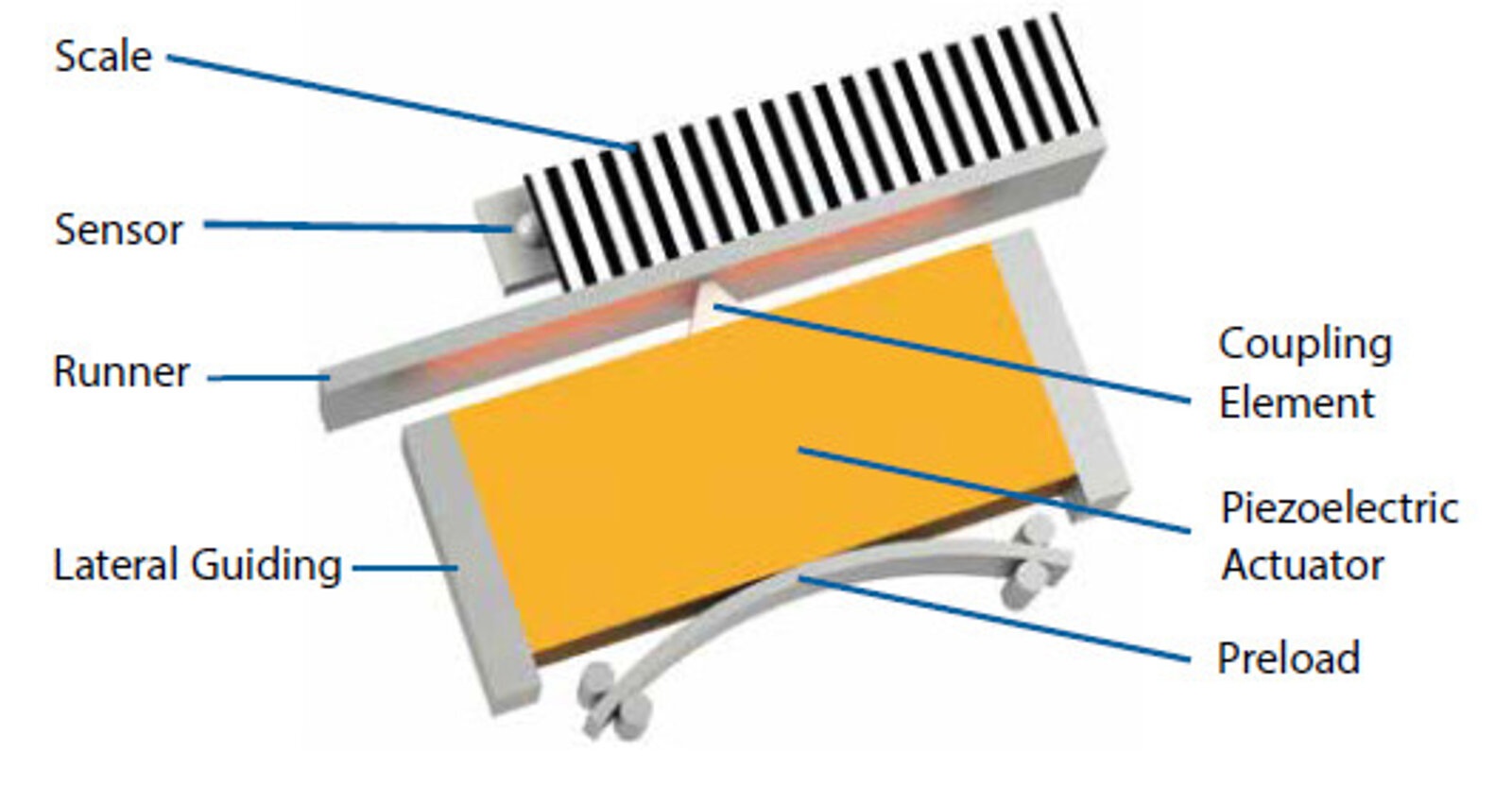

Individual ceramic plates measure 25 × 11 × 1 mm. Four of these plates are incorporated into a composite ultrasonic actuator (PILine piezo-motor family).
The important part of the design is how those layers are assembled.
A Four-Layer Composite Actuator
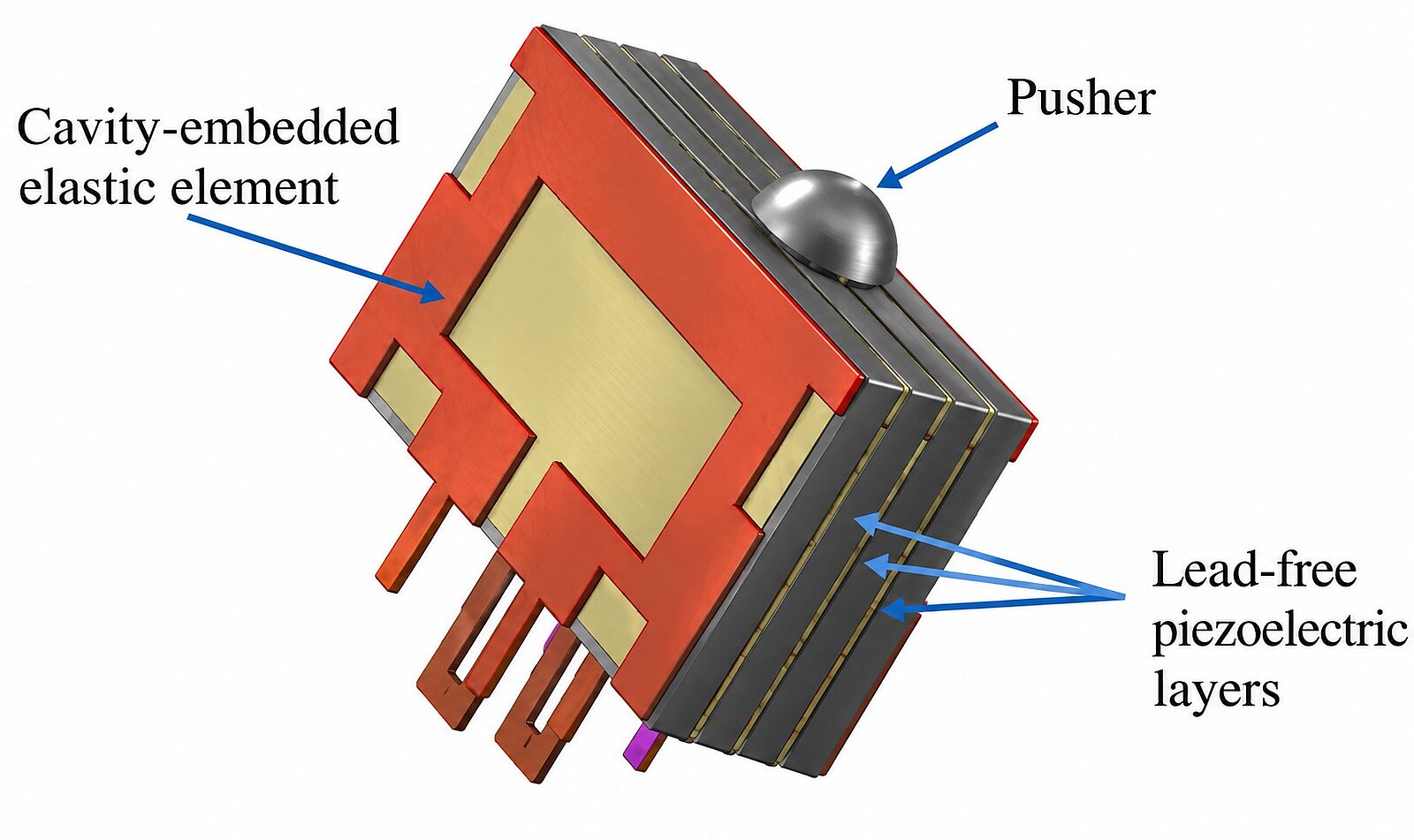
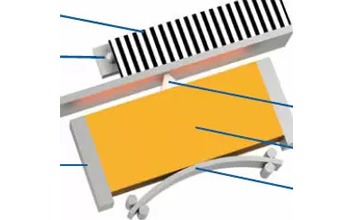
The four lead-free ceramic layers are bonded to cavity-embedded elastic elements made from copper, with an alumina pusher forming the contact element.
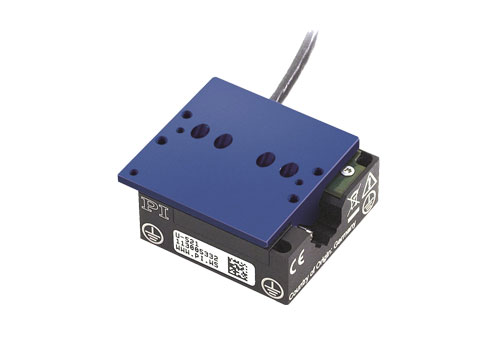
The elastic elements perform several functions. They provide the mechanical structure required by the actuator, improve thermal conduction, and incorporate cavities that help dissipate heat. Their geometry and clamping positions were also designed to minimize unwanted oscillation amplitudes and associated mechanical losses. The actuator was installed in a metal housing and preloaded against the runner bar of a U-551K005 test stage.
This is an important distinction from simply substituting a lead-free piezo ceramic into an existing ultrasonic motor. The ceramic, mechanical structure, thermal path, clamping arrangement, and drive conditions were considered together.
Finding the Operating Point
Impedance measurements were performed with the actuator mounted on the stage under a 10N preload. The measured eigenfrequency was 194.3kHz. The stage was then operated continuously using the controller's auto-frequency function. The search range was set from 192 to 196kHz while the controller tracked the optimum operating frequency. At closed-loop velocities of 20 and 40mm/s, the required motor output remained below 60% of the controller's maximum allowable voltage during ten minutes of continuous operation. The optimum operating frequency moved toward 196kHz, leading the researchers to investigate fixed-frequency operation as well.


Stable Continuous Operation

Fixed-frequency testing provides a useful indication of whether thermal changes continue to move the operating point. At a closed-loop velocity of 20mm/s, frequencies from 196 to 198kHz were tested over ten minutes. The required voltage remained relatively constant after the initial operating period. The authors attribute this behavior to the improved thermal conductivity of the composite structure and the cavities between the layers.
This addresses one of the main differences with lead-free ultrasonic motors. If temperature causes a large resonance shift, the motor and controller must continually compensate. Reducing that shift makes the actuator considerably easier to operate as part of a precision motion and positioning system.
4N Push/Pull Force at Speeds up to 60mm/s
Thermal stability alone is not sufficient. The actuator also has to provide useful mechanical output.
The researchers measured push/pull force using a rope-and-roller arrangement with dummy loads. The U-551K005 test stage delivered 4N against gravity at closed-loop velocities of 10, 20, 40, and 60 mm/s.
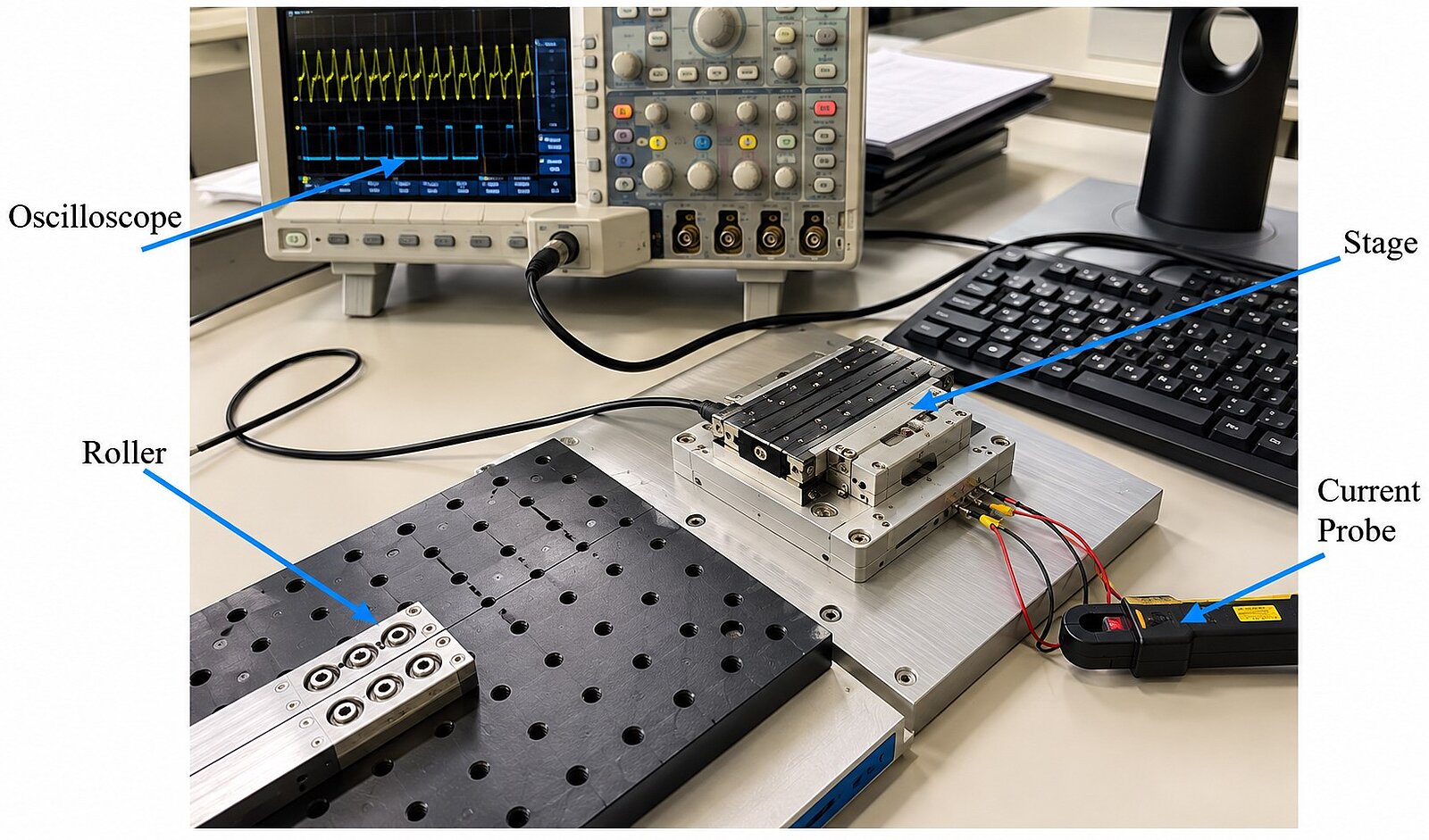

Tests were performed at 192 and 194kHz, with the required voltage remaining below 70% of the controller's maximum drive voltage.
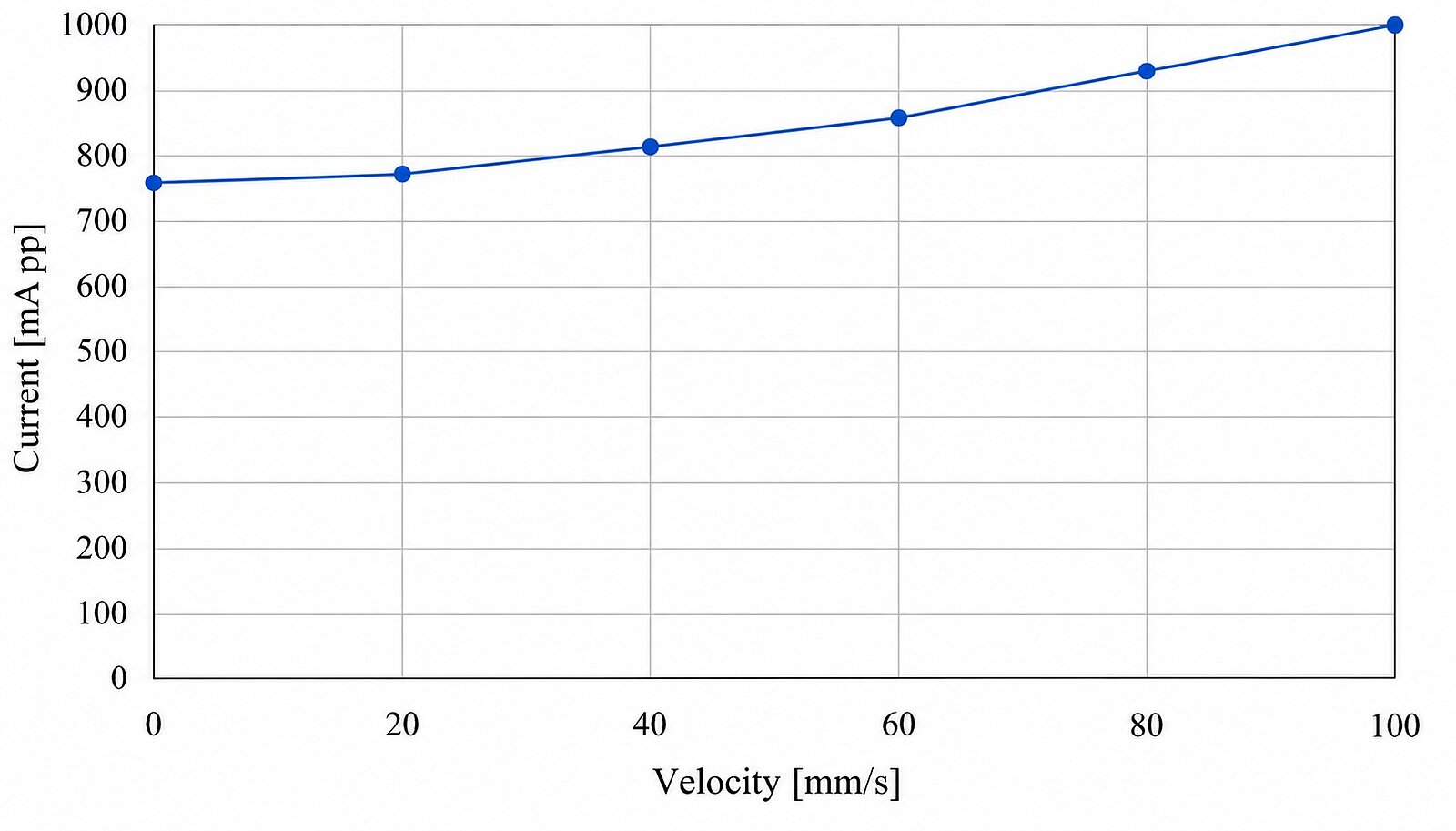
The current was measured separately while operating against the same 4N load. Although the layered actuator requires more current, measurements remained below 1000mA, within the specification of the C-867.2U2 controller used for the experiments. That result matters from a system-design perspective. The new actuator architecture does not require an entirely different class of drive electronics simply because the ceramic material has changed.
Long Term Operation
Short-term tests can show whether a motor works. They say less about whether its operating point remains stable.

For the lifetime test, the stage was operated at 10mm/s for more than 80 days. Tests were conducted at fixed frequencies of 194 and 195kHz. The required voltage showed no degradation over the test period, and the researchers reported no excessive heat generation.
This long-duration result is particularly relevant because thermal behavior was one of the main reasons for developing the layered structure in the first place.
What the Results Tell Us
As observed previously, continuous operation heats lead-free bulk piezoelectric actuators and raises their resonant frequency. The resulting shift makes auto-frequency mode unsuitable for stages using these types of bulk actuators, so their maximum operating frequency must be limited to maintain stable operation.
On the other hand, layered-structure lead-free-piezoelectric motors show much smaller frequency shifts from self-heating and can operate in auto-frequency mode. The test stage’s four-layer actuator demonstrated continuous operation, 4N push/pull capability at speeds up to 60 mm/s, current requirements compatible with the controller, and stable performance during a test lasting more than 80 days.
» Read the full PDF paper by Bülent Delibas, Burhanettin Koc



Blog Categories
- Aero-Space
- Air Bearing Stages, Components, Systems
- Astronomy
- Automation, Nano-Automation
- Beamline Instrumentation
- Bio-Medical
- Hexapods
- Imaging & Microscopy
- Laser Machining, Processing
- Linear Actuators
- Linear Motor, Positioning System
- Metrology
- Microscopy
- Motorized Precision Positioners
- Multi-Axis Motion
- NanoAutomation
- Nanopositioning
- Photonics
- Piezo Actuators, Motors
- Piezo Mechanics
- Piezo Transducers / Sensors
- Precision Machining
- Semicon
- Software Tools
- UHV Positioning Stage
- Voice Coil Linear Actuator
- X-Ray Spectroscopy