Beam steering is a fundamental requirement in applications ranging from optical metrology and laser processing to medical instruments and communications systems. In the lab, adjusting a mirror with a pair of micrometer screws is often sufficient. In industrial systems, however, beam steering must be automated, repeatable, and compact enough to fit inside increasingly space-constrained optical assemblies.
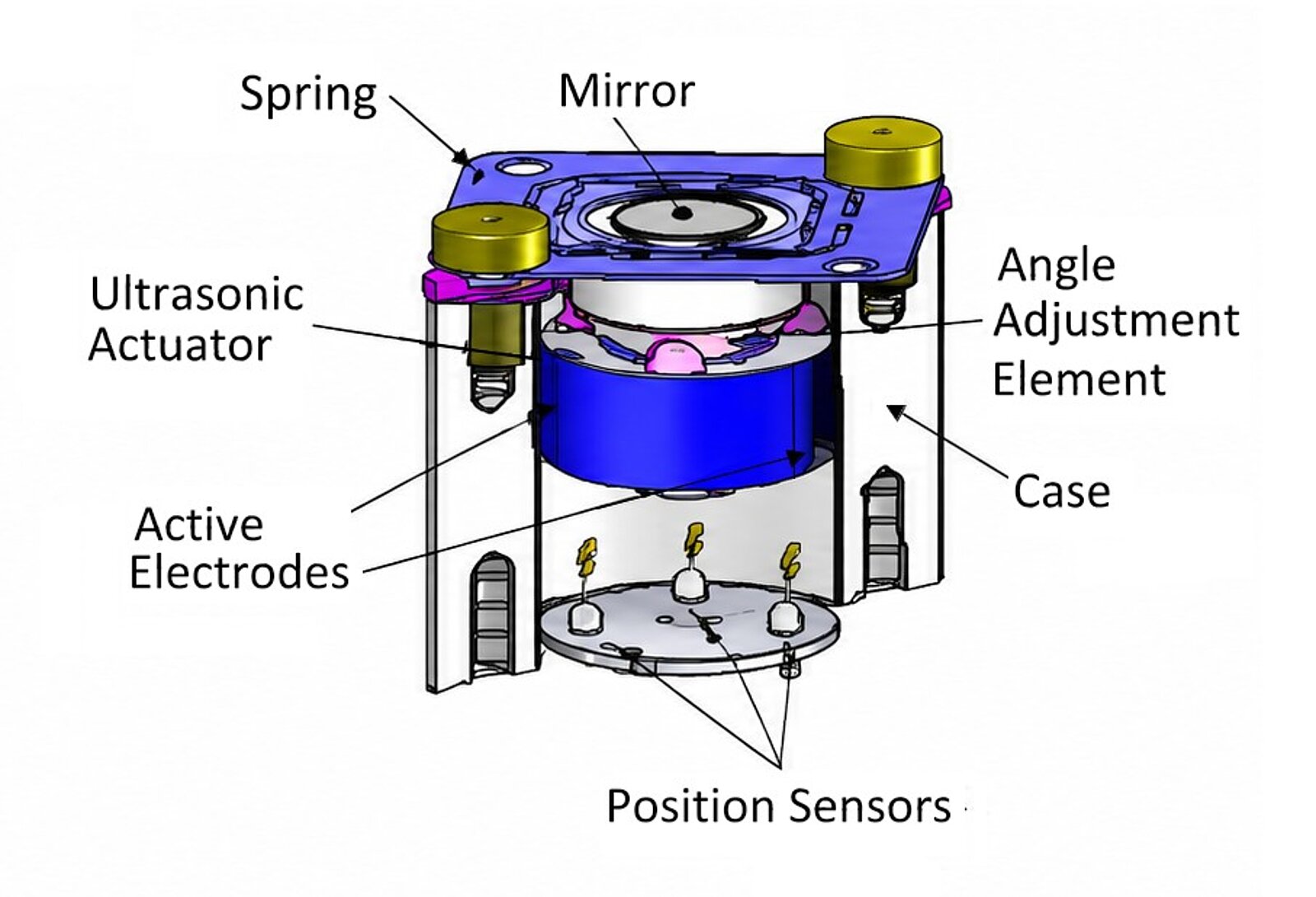
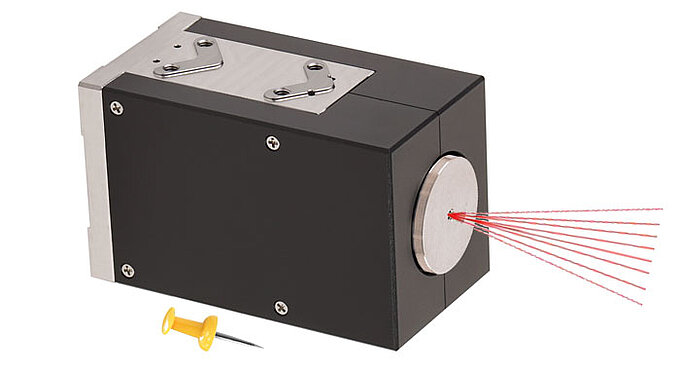
A recent development at PI explores a different approach to miniature beam steering devices: a two-axis tip/tilt mirror driven by a single piezoelectric ultrasonic motor. The functional prototype measures just 16 × 16 × 16 mm³ and generates rotation about two axes without requiring separate actuators for each degree of freedom.
While still at the functional-sample stage, the concept demonstrates an interesting way to combine compact packaging, relatively large angular travel, and the self-locking characteristics of piezoelectric motor technology.
Rethinking Miniature Beam Steering Devices
Piezoelectric actuators are already widely used for tip/tilt mirror control. Direct-drive flexure systems can deliver high stiffness, excellent resolution, and high control bandwidth, making them a proven solution for precision optical alignment and Fast Steering Mirror (FSM) applications, such as Free Space Optical Communication.
The challenge comes when trying to make these mechanisms exceptionally small. As dimensions shrink, maintaining both motion range and stiffness becomes increasingly difficult. Designers often find themselves trading one for the other.
Piezoelectric motors offer an alternative path. Rather than directly deforming a structure to create motion, they transfer movement through repetitive motion between a piezoelectric actuator and a moving element. This approach can combine compact dimensions with relatively large travel ranges while retaining the inherent stiffness associated with piezo technologies.
Inertia-based piezo motors are one established example. These systems often use stick-slip motion to drive a spindle or screw. For a miniature two-axis steering mirror, however, the authors identify several drawbacks, including limited traversing speed, audible-frequency operation, and the space required for multiple actuators and screw mechanisms.
The ultrasonic motor investigated here was developed to address those limitations while preserving two valuable characteristics of piezo motors: wide travel range and self-locking behavior. Once positioned, the mirror can hold its orientation even after drive power is removed.
One Stator, Two Degrees of Freedom
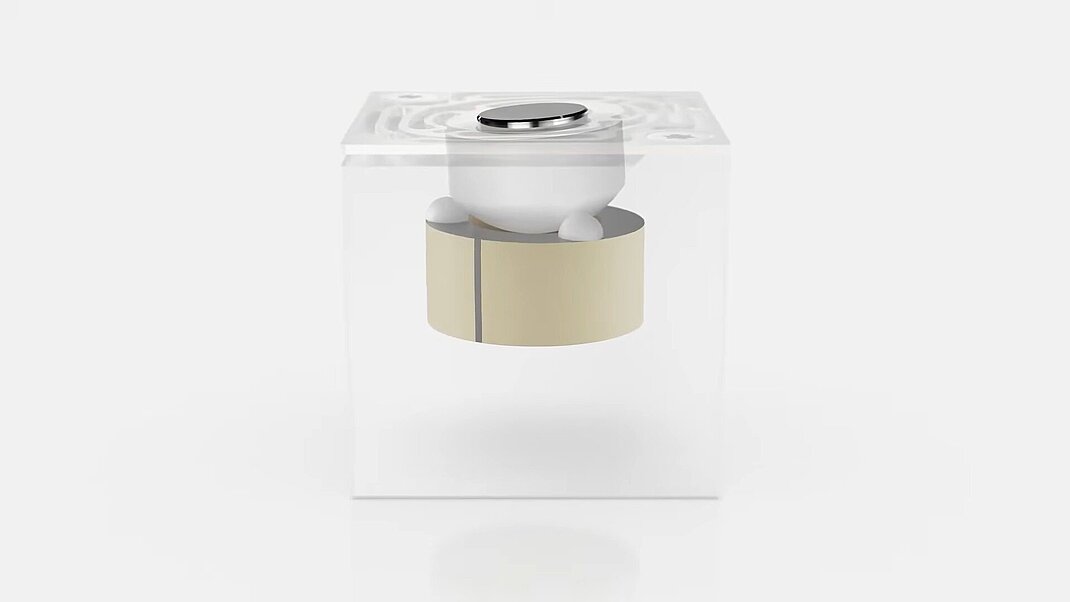
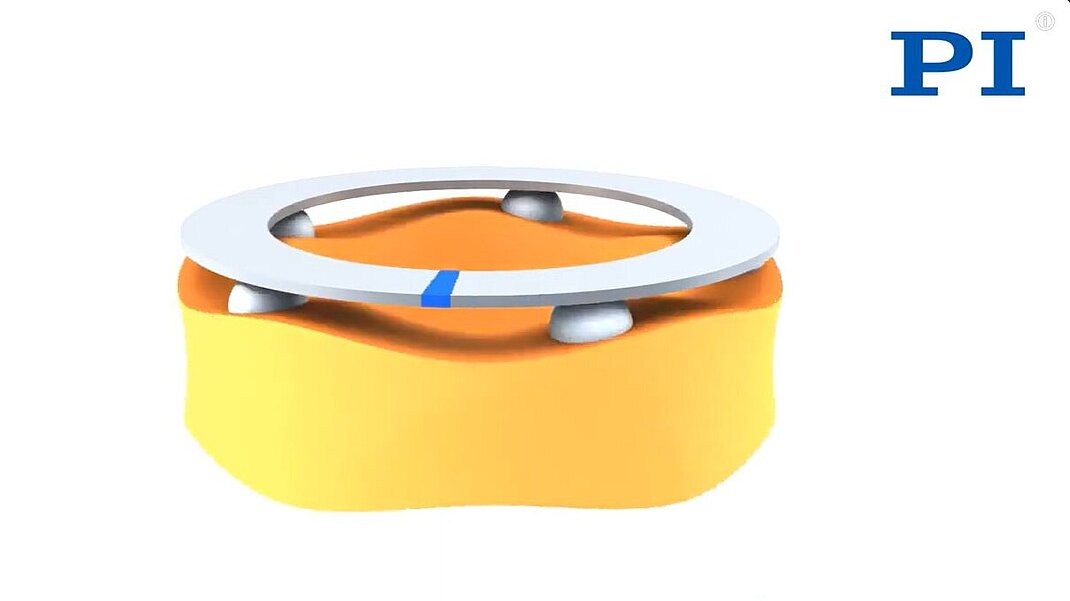
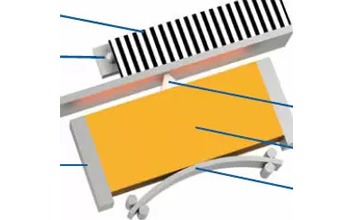
At the heart of the design is a hollow cylindrical resonator fabricated from PIC 181 hard piezoelectric ceramic. The mirror is mounted within a hemispherical ceramic rotor, while three contact tips spaced at 120° intervals transfer motion from the stator to the rotor. A spring preload maintains the friction force required at these contact points.
The resonator uses a common inner electrode and three outer electrode segments, each spanning 120 degrees around the circumference. Applying a sinusoidal voltage to one segment excites a resonant vibration mode within the ceramic structure.
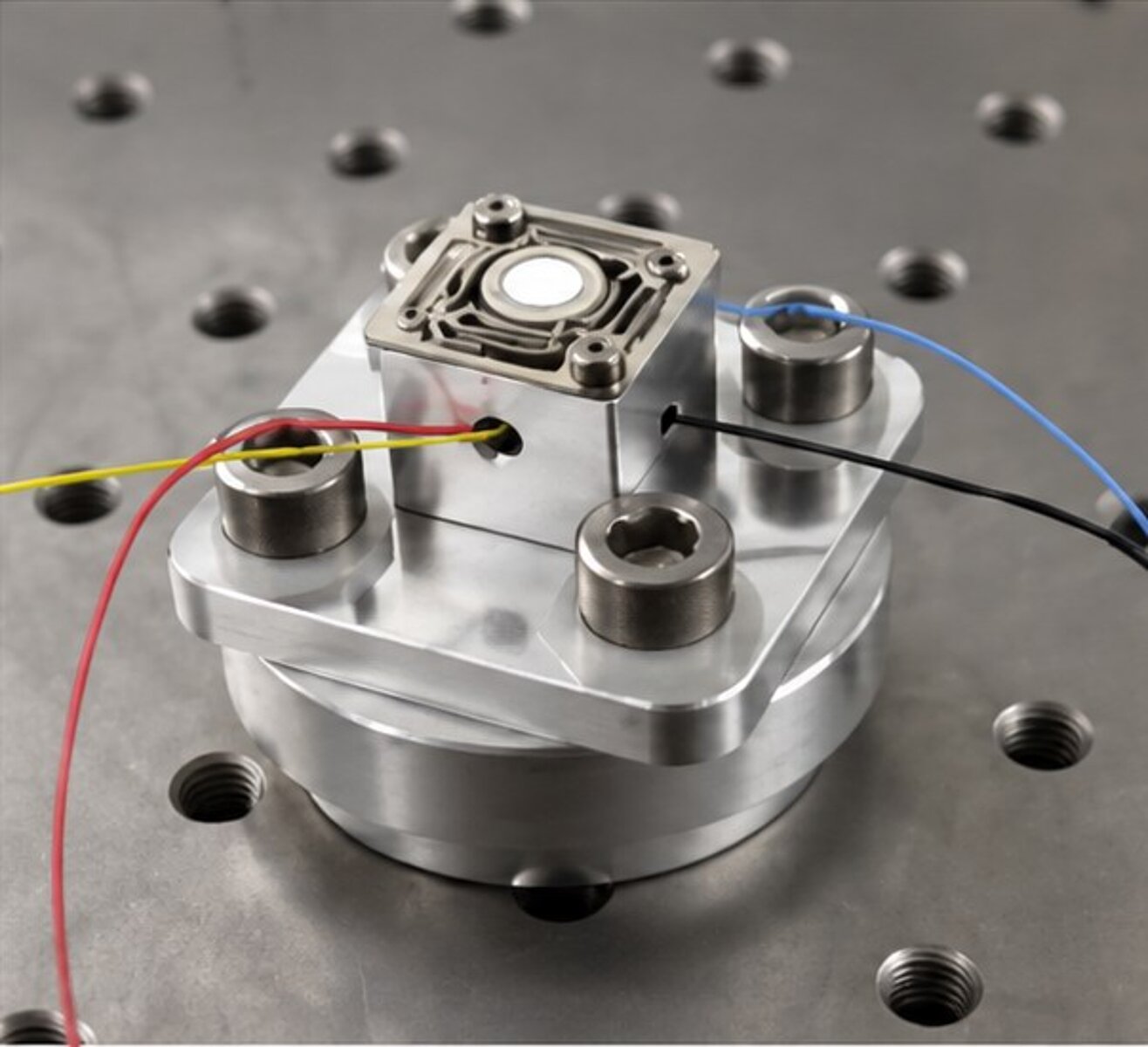
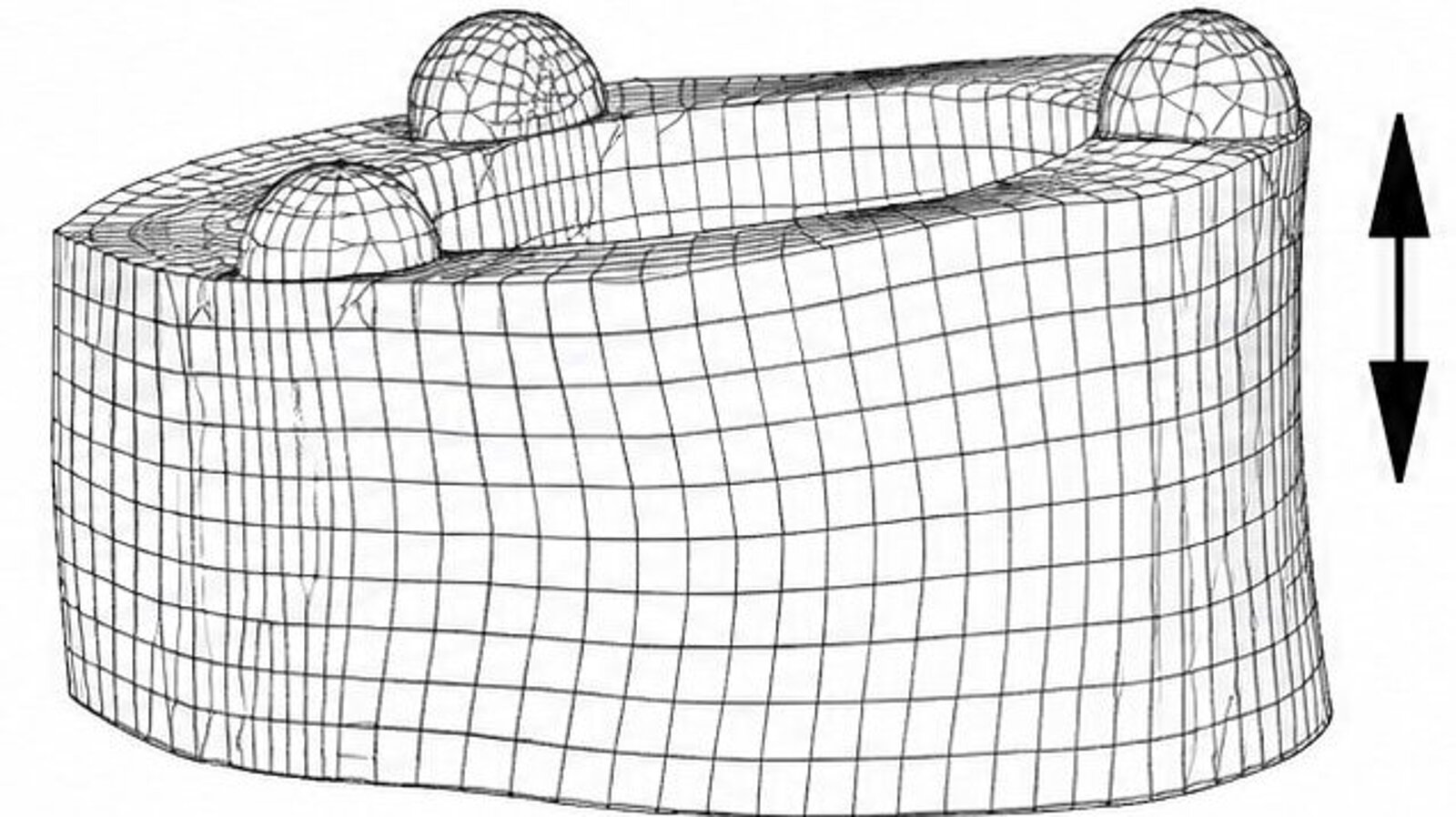
Finite-element simulations predict this mode at approximately 406 kHz. At resonance, the resulting motion at the contact points drives rotation of the rotor. By selectively exciting different electrode segments, the system can generate motion in different directions, allowing the mirror to reach a range of tip and tilt positions.
What makes this architecture particularly interesting is that both angular degrees of freedom are generated from a single piezoelectric stator. Eliminating the need for two independent motor assemblies contributes directly to the compact 16 mm package size. Operating at more than 400 kHz also places the drive frequency well above the audible range.
The Importance of Preload
Like any friction-driven motor, performance depends on maintaining sufficient normal force at the contact interface. In the prototype, the actuator is designed to generate approximately 1 N of force at the contact points between the spherical tips and rotor.
The preload mechanism does more than simply maintain friction. The flat spring used in the design also influences the attainable motion range. As the mirror moves away from its neutral position, the spring's restoring force increases. The farther the mirror tilts, the more of the available actuation force is consumed, overcoming that restoring force.
Eventually, the restoring force becomes equal to the available driving force, defining the practical motion limit of the system.
This creates a motion envelope that is more complex than a simple rectangular or circular operating range. The effect becomes visible in the measured two-dimensional trajectories and ultimately shapes the attainable workspace.
Validating the Ultrasonic Resonator
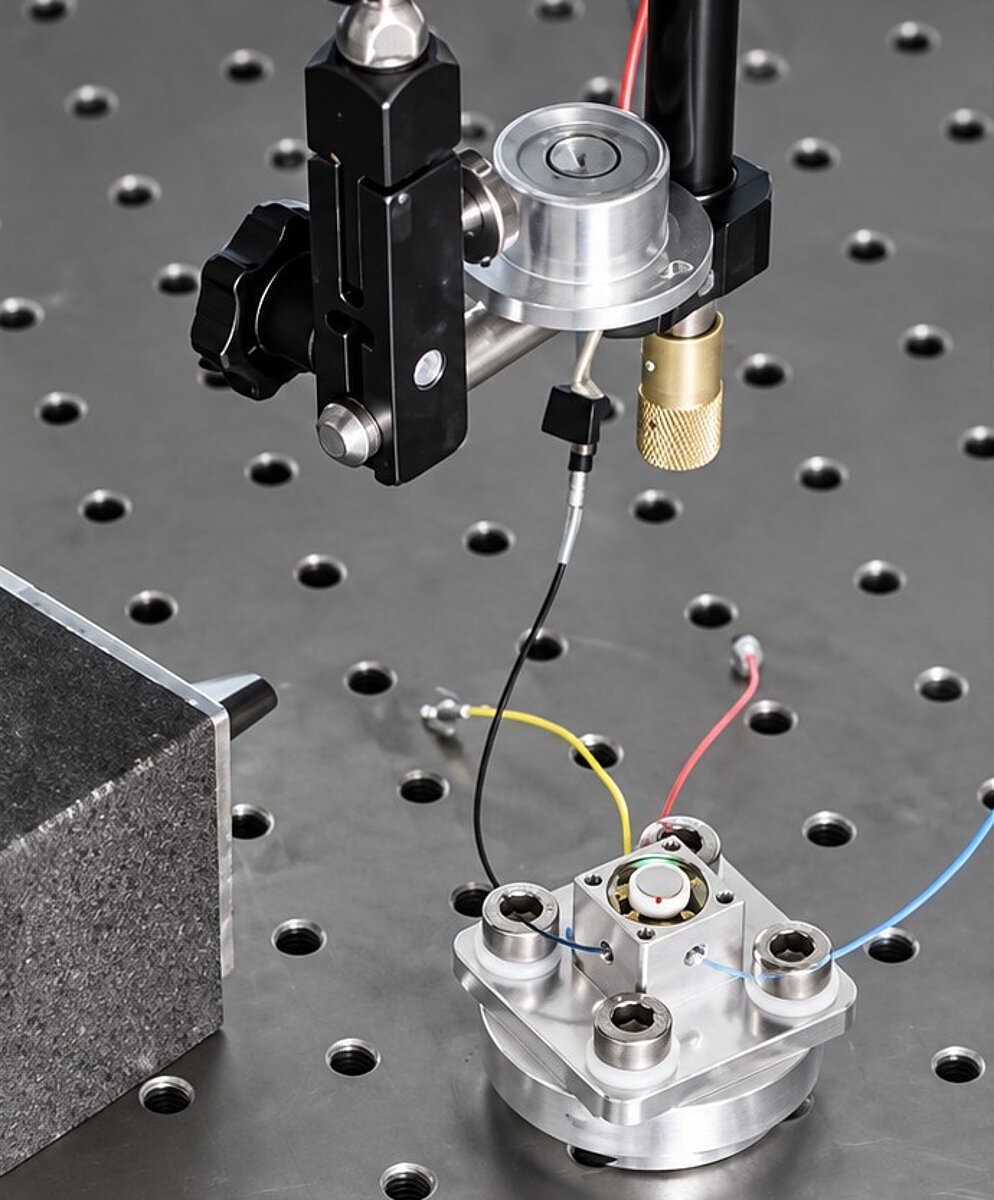
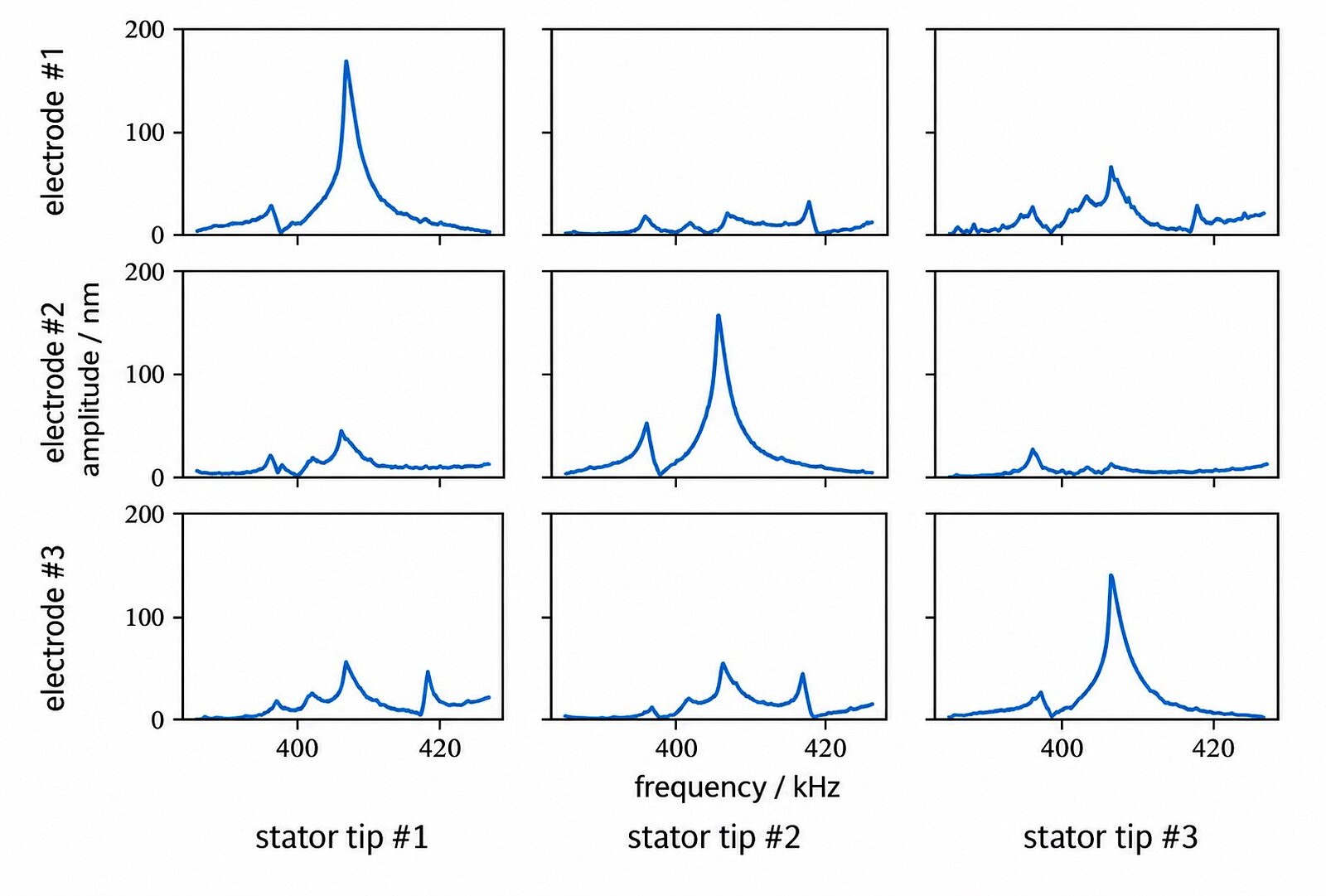
To verify the resonator design, the researchers characterized the stator using a laser vibrometer. An open-loop sinusoidal frequency sweep from 380 kHz to 430 kHz was applied at a mean operating voltage of 15 Vrms while oscillation amplitudes were measured at the three stator tips.
The key result is the close agreement between simulation and measurement. For each electrode segment, the corresponding stator tip reached an oscillation amplitude of approximately 150 nm at resonance, with the measured resonance occurring near 406 kHz.
When non-corresponding electrodes were excited, tip motion remained comparatively small, confirming that the intended vibration mode was being generated.
For a functional prototype, this correlation between finite-element predictions and measured performance is particularly valuable because it demonstrates that the modeled resonator behavior translates directly into the physical device.
For a functional prototype, this correlation between finite-element predictions and measured performance is particularly valuable because it demonstrates that the modeled resonator behavior translates directly into the physical device.
Characterizing Tip/Tilt Performance
Mirror motion was measured using an autocollimator. The evaluation consisted of 55 individual movements across the two-dimensional workspace, with trajectories executed in alternating directions.
The resulting operating area forms a roughly triangular region rather than the circular or square workspaces commonly associated with many positioning systems. According to the authors, this shape is primarily determined by the interaction between motor force and the changing restoring force produced by the preload spring.
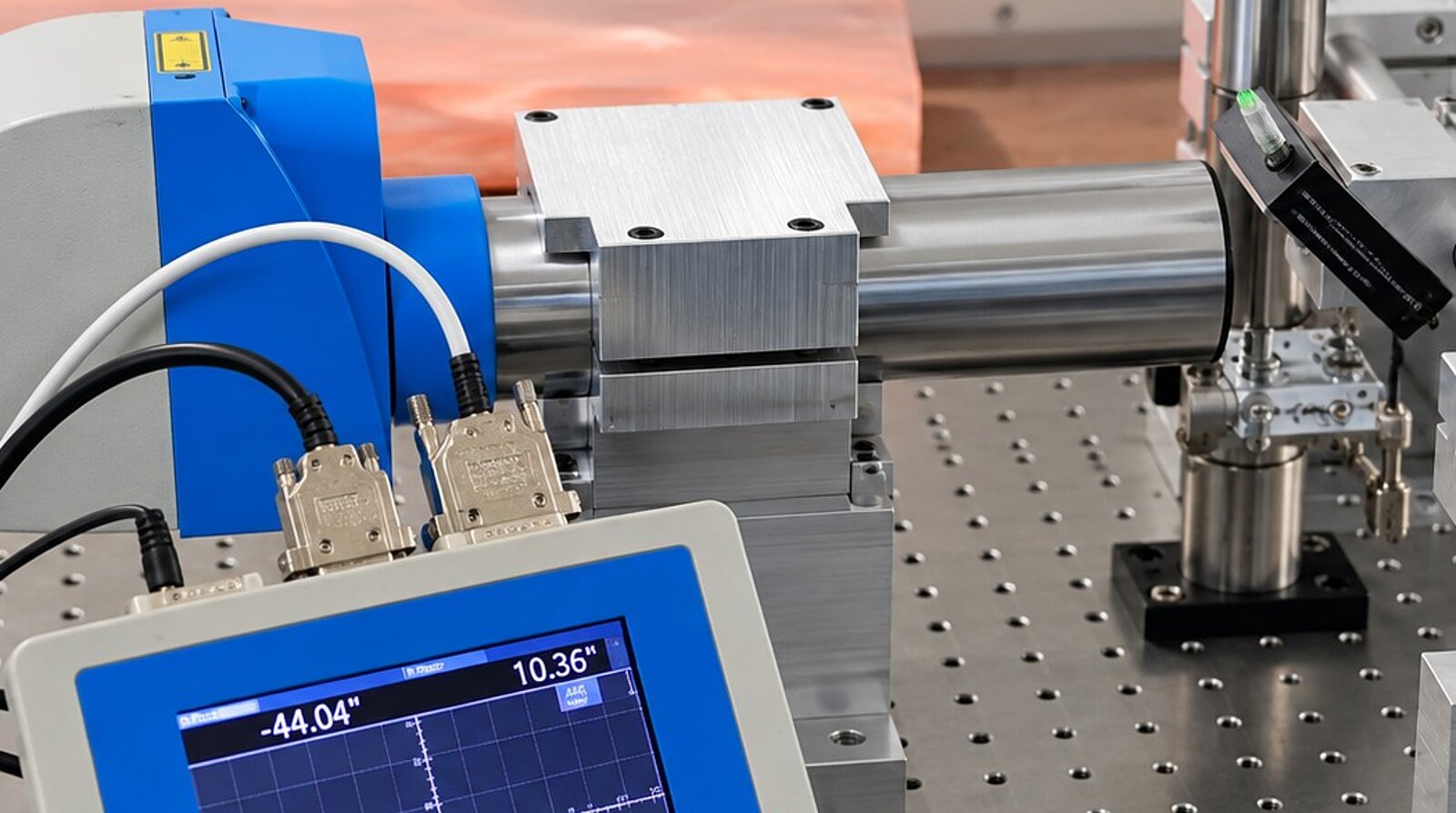
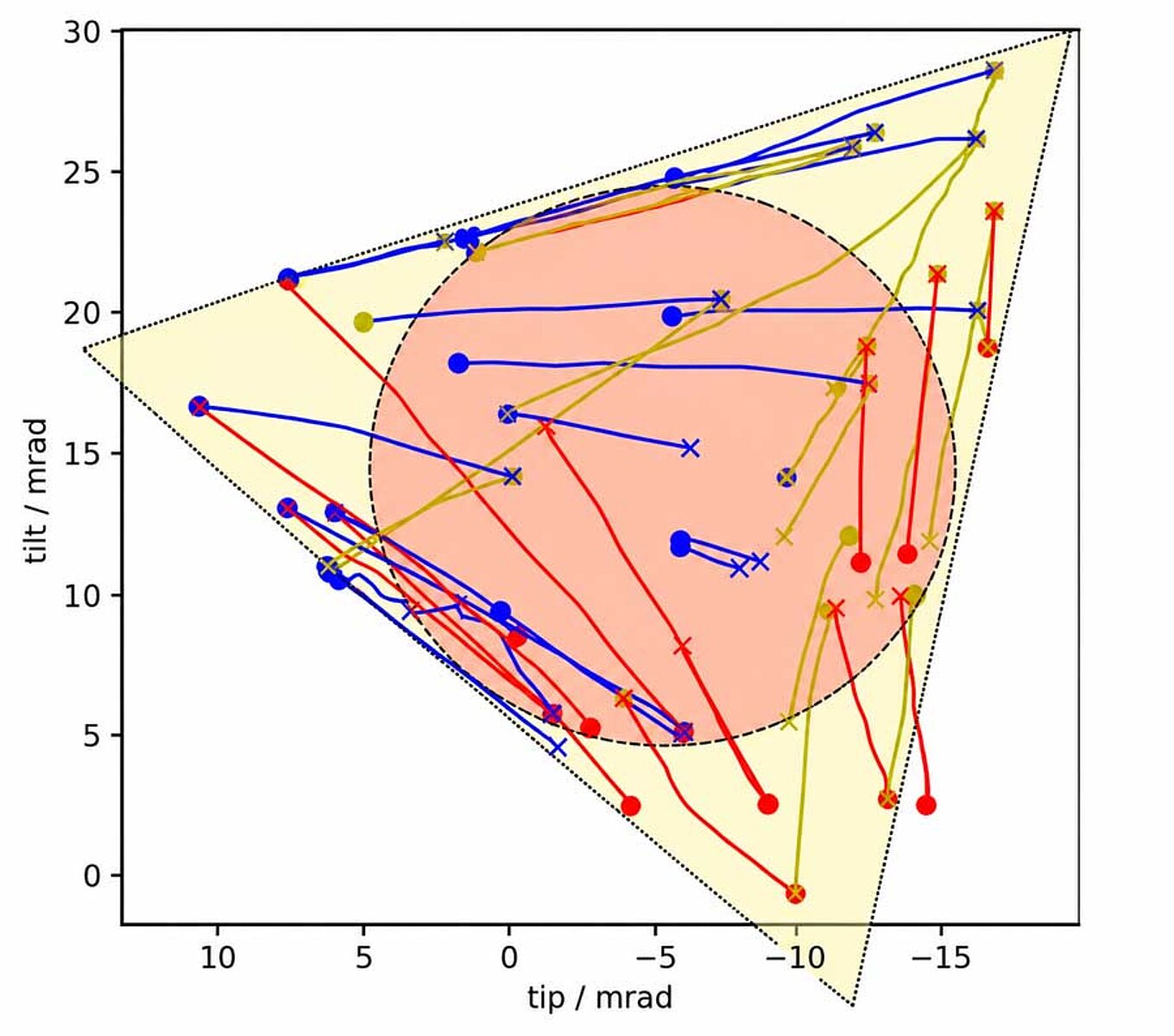
To define a practical operating specification, the researchers identified the largest circular region that could be fully enclosed within this measured workspace. Based on that criterion, the prototype demonstrated an angular travel range of ±10 mrad.
Importantly, this value represents a usable two-dimensional operating range rather than a maximum excursion achieved along a single favorable direction.
What the Prototype Demonstrates
The work demonstrates that a single ultrasonic piezoelectric resonator can generate controlled motion about two angular axes within an extremely compact package.
The measured resonance frequency closely matches finite-element predictions, validating the resonator design, and the prototype achieves a two-dimensional angular range of ±10 mrad under the range definition used in the study.
Just as importantly, the authors present the device as a functional proof of concept rather than a finished positioning product. Testing was performed open loop, and future development efforts are expected to focus on integrated position sensing and closed-loop control strategies.
From an engineering standpoint, that is precisely what makes the work interesting. Before addressing advanced control algorithms, the team first demonstrated the underlying electromechanical principle, verified the resonator behavior, and established the achievable motion range of the concept. The result is a compact beam-steering architecture that shows how ultrasonic piezo motor technology can be applied to generate two-axis mirror motion using a single actuator structure.
Other Steering Mirror Technologies
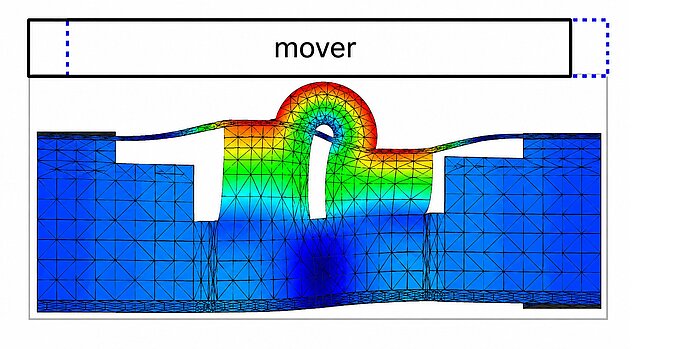
The ultrasonic concept is one of several ways to generate high precision tip/tilt motion. Direct-drive and motion-amplified piezo flexure mechanisms are the most established approach. These typically parallel-kinematic FSM designs offer high stiffness, high control bandwidth, position stability, and resolution. Their tradeoff in very small packages is that further miniaturization can significantly reduce available motion range and/or stiffness.
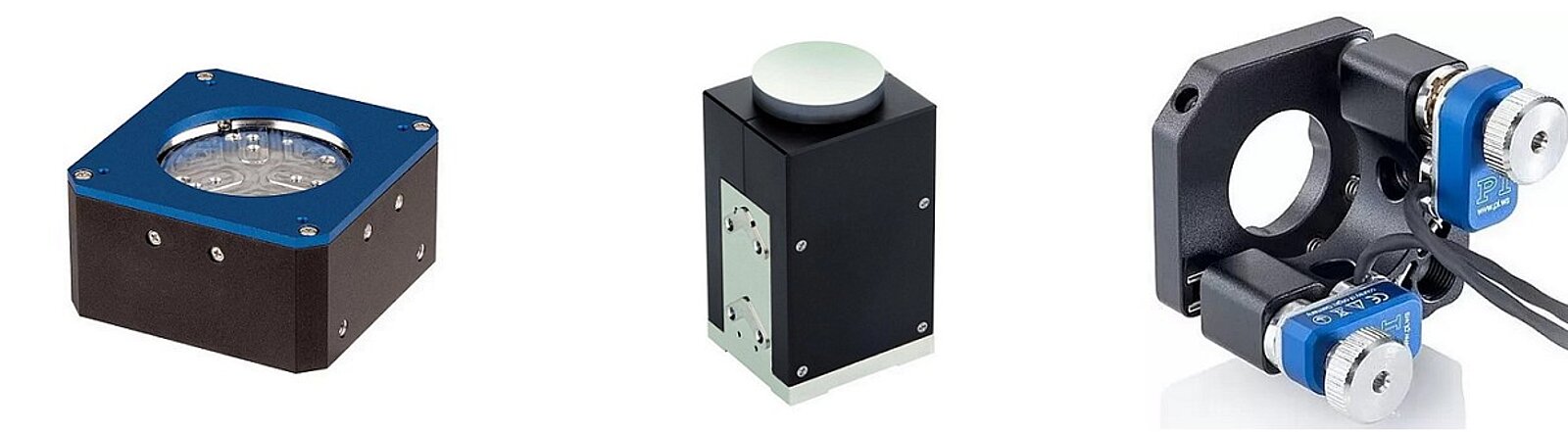
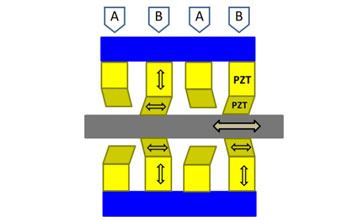
Piezo inertia drives can provide a wider motion range but rely on stick-slip operation which usually limits velocity and can add vibration and unwanted noise.
Voice-coil fast steering mirrors are another established steering-mirror architecture. Not as fast as direct-drive piezo architectures, they provide a good balance of angular range and bandwidth.
» Read the full PDF paper by Jan Homberg, Alexej Wischnewski, Bülent Delibas



Blog Categories
- Aero-Space
- Air Bearing Stages, Components, Systems
- Astronomy
- Automation, Nano-Automation
- Beamline Instrumentation
- Bio-Medical
- Hexapods
- Imaging & Microscopy
- Laser Machining, Processing
- Linear Actuators
- Linear Motor, Positioning System
- Metrology
- Microscopy
- Motorized Precision Positioners
- Multi-Axis Motion
- NanoAutomation
- Nanopositioning
- Photonics
- Piezo Actuators, Motors
- Piezo Mechanics
- Piezo Transducers / Sensors
- Precision Machining
- Semicon
- Software Tools
- UHV Positioning Stage
- Voice Coil Linear Actuator
- X-Ray Spectroscopy