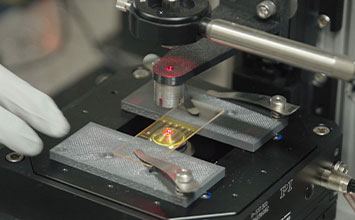
Microtomes are essential tools in life-science research, histology, and materials analysis, enabling researchers to cut ultra-thin, consistent slices of biological tissue or engineered materials. As microscopy and imaging technologies push toward higher resolution and faster throughput, the motion subsystems inside microtomes must meet far more demanding requirements than traditional designs were ever built for.
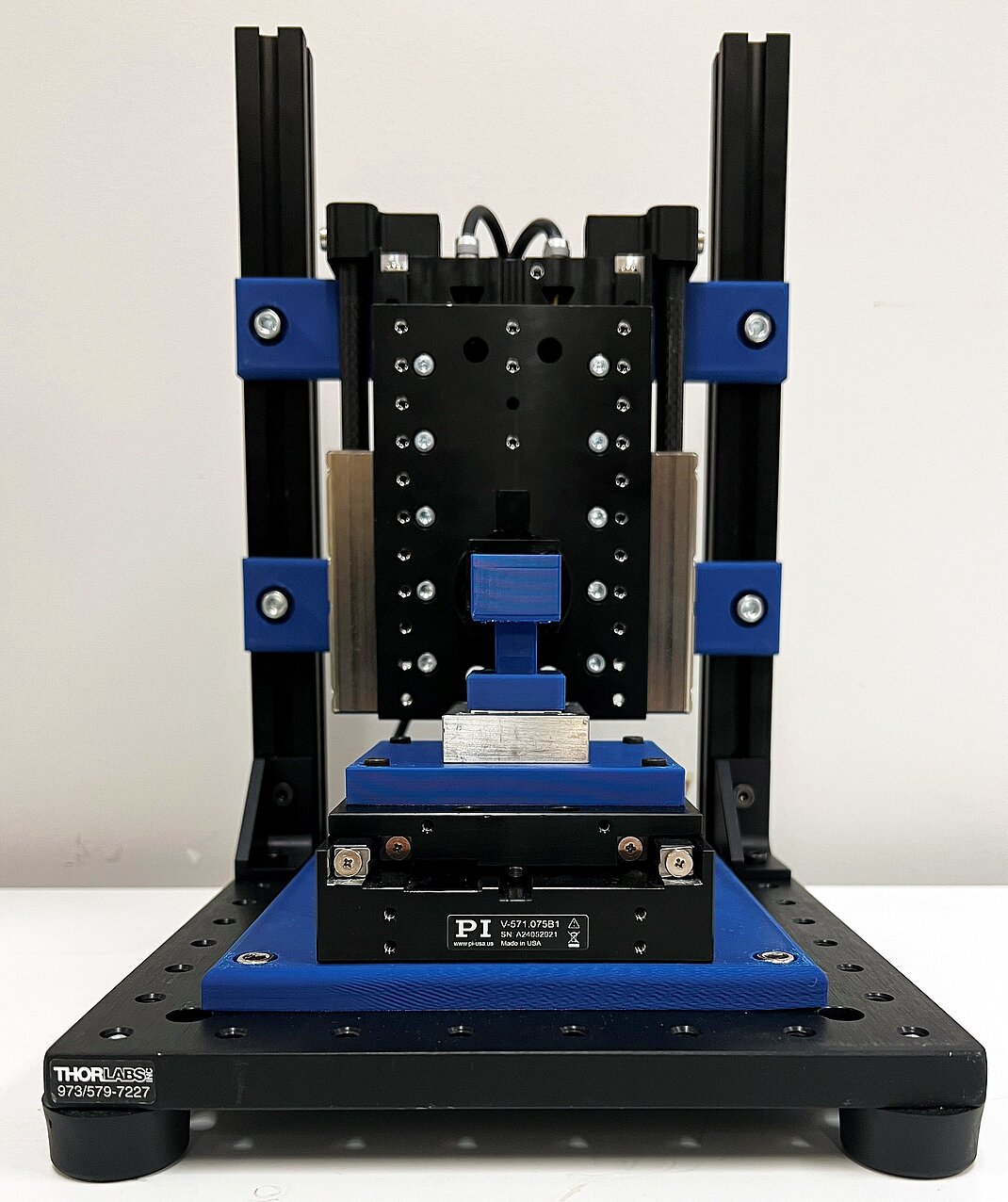
The Challenge with Conventional Microtome Designs
Traditional microtomes often rely on mechanical lead-screw or belt-driven translation stages to position the sample block. While these mechanisms have been reliable for decades, they face several inherent limitations:
- Backlash and friction introduce variability in slice thickness and repeatability.
- Mechanical wear leads to loss of precision and drift, or increased maintenance.
- Backlash or limited stiffness reduces control over stop-and-go motion.
- Poor dynamic response restricts the ability to adapt to automated, imaging workflows.
As labs automate more steps—from sectioning to image acquisition—the precision limitations of classical microtomes can become bottlenecks in both image quality and throughput.
Rising Precision Requirements
Research workflows now demand:
- Sub-micron positioning accuracy for consistent section thickness
- High stiffness to suppress vibration and enhance cutting stability
- Fast, stable motion profiles for integration with high-speed imaging
- Low noise and long lifetime for continuous operation sessions
These demands highlight the need for motion systems that combine long travel, smooth mechanics, and nanometer-level positioning—all in a compact footprint suitable for integrated microtomes.
A Better Approach:
V-571 Direct Drive Linear & Vertical Stages + Piezo Flexure Nanopositioning Stage
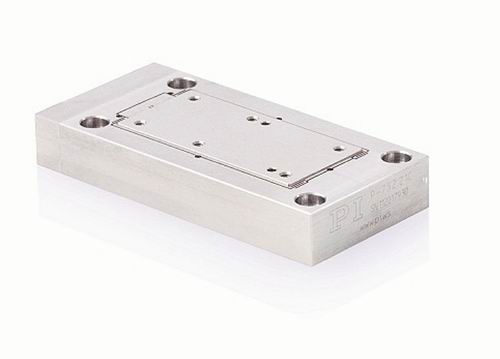
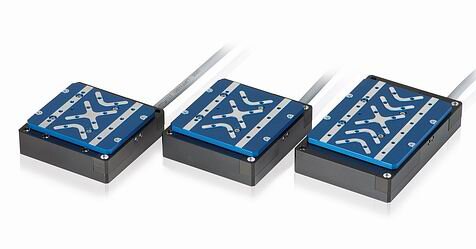
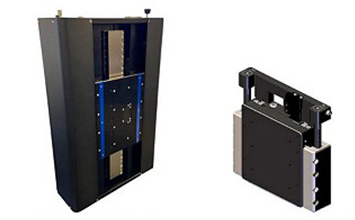
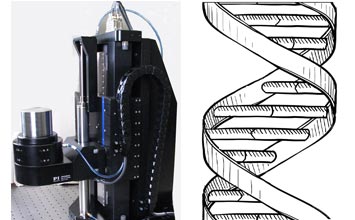
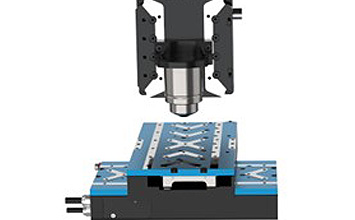
PI’s modular combination of the V-571 precision linear stage, a the magnetically counterbalanced V-571.Z vertical translation stage, and the P-752 piezo-flexure nanopositioning stage offers a modern, high-performance motion architecture that directly addresses the shortcomings of traditional microtome mechanisms.
1. The V-571 Linear Stage: Long Travel with High Precision
- Direct-drive linear motor for smooth, frictionless motion
- Crossed-roller bearings for high stiffness, low friction, and long lifetime
- Excellent straightness and flatness ideal for block advance
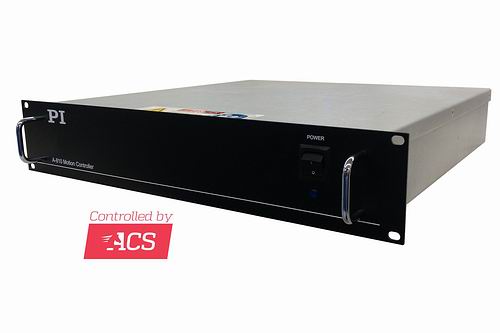
- Direct-measuring absolute encoders with 1nm resolution for repeatable motion steps down to 5 nanometers
- Near-zero maintenance—no lubrication, no wear
2. Direct Drive Vertical Stage with Magnetic Counterbalance: Stable Z-Axis Cutting Motion
- Rigid bearing design ensures stable force transmission during slicing
- Direct-drive linear motor with direct-measuring absolute encoder and magnetic counterbalance (eliminates gravity-load on motor) improves precision and eliminates backlash
- Supports different motion profiles, constant velocity, fast acceleration, for consistent vertical feed motions
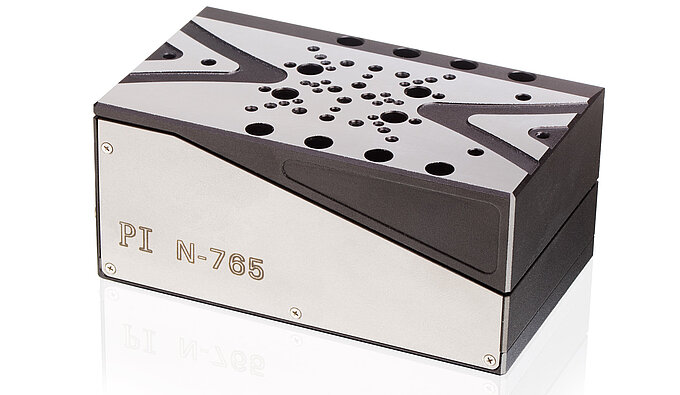
3. Optional P-752 Piezo Flexure Stage: Nanometer-Level Control
- High-stiffness piezo actuation for precise thickness control and millisecond response
- Friction-free and wear-free flexures ensure perfectly smooth motion
- Closed-loop operation for sub-nanometer motion control and stability
- Ideal for active compensation, adaptive control
Why This Architecture Wins
By combining long-travel direct-drive linear motion, backlash-free vertical feed, and high-speed nanometer positioning, this hybrid architecture simply outperforms conventional microtome mechanisms, giving instrument makers a future-proof foundation for next-generation sectioning and imaging technologies.



Blog Categories
- Aero-Space
- Air Bearing Stages, Components, Systems
- Astronomy
- Automation, Nano-Automation
- Beamline Instrumentation
- Bio-Medical
- Hexapods
- Imaging & Microscopy
- Laser Machining, Processing
- Linear Actuators
- Linear Motor, Positioning System
- Metrology
- Microscopy
- Motorized Precision Positioners
- Multi-Axis Motion
- NanoAutomation
- Nanopositioning
- Photonics
- Piezo Actuators, Motors
- Piezo Mechanics
- Piezo Transducers / Sensors
- Precision Machining
- Semicon
- Software Tools
- UHV Positioning Stage
- Voice Coil Linear Actuator
- X-Ray Spectroscopy